 Chronological list of courses taught 2003–ThePresent
Chronological list of courses taught 2003–ThePresent
Chronological list of courses taught 2003–ThePresent
See the
Teaching Page
for  Usually Useful Pamphlets.
 Sets & Logic.
Guides students on how to read/produce proofs, learning some of the language of
modern Mathematics. My section will focus on problem-solving; both Putnam
and USAMO problems will be used as examples.
Both Induction
and the
Pigeon-hole Principle (a counting argument)
will be introduced early in the semester.
Sets & Logic.
Guides students on how to read/produce proofs, learning some of the language of
modern Mathematics. My section will focus on problem-solving; both Putnam
and USAMO problems will be used as examples.
Both Induction
and the
Pigeon-hole Principle (a counting argument)
will be introduced early in the semester.
 (theoretical) Linear Algebra.
Matrices, determinants, Gauss-Jordan algorithm, eigenvalues/vectors,
matrix diagonalization, various matrix decompositions.
Sets and Logic, 2021Autumn.
(theoretical) Linear Algebra.
Matrices, determinants, Gauss-Jordan algorithm, eigenvalues/vectors,
matrix diagonalization, various matrix decompositions.
Sets and Logic, 2021Autumn.
 Intro/Elem. Complex variables
.
How is complex differentiability connected to power-series expansion?
Sets and Logic.
Guides students on how to read/produce proofs, learning some of the language of
modern Mathematics. My section will focus on problem-solving; both Putnam
and USAMO problems will be used as examples.
Both Induction
and the
Pigeon-hole Principle (a counting argument)
will be introduced early in the semester.
Intro/Elem. Complex variables
.
How is complex differentiability connected to power-series expansion?
Sets and Logic.
Guides students on how to read/produce proofs, learning some of the language of
modern Mathematics. My section will focus on problem-solving; both Putnam
and USAMO problems will be used as examples.
Both Induction
and the
Pigeon-hole Principle (a counting argument)
will be introduced early in the semester.
 Elem. Differential Eqns.
Linear, separable, autonomous DEs, intro to Differential Operators, for the bright, motivated, hard-working student. Time permitting, we'll introduce the Matrix Exponential as a way of solving interconnected linear DEs.
Prospective DiffyQ students should seriously review High-School mathematics (eqns of lines, parabolas; quadratic formula; sum of a geometric series) before or during Add/Drop.
Sets and Logic, 2020Autumn.
Sets and Logic, 2020g.
Elem. Differential Eqns, 2020g
Linear, separable, autonomous DEs, intro to Differential Operators, for the bright, motivated, hard-working student. Time permitting, we'll introduce the Matrix Exponential as a way of solving interconnected linear DEs.
Prospective DiffyQ students should seriously review High-School mathematics (eqns of lines, parabolas; quadratic formula; sum of a geometric series) before or during Add/Drop.
 Abstract Algebra 1
.
An introduction to Groups, primarily, with some discussion of Rings and Fields.
This is for the motivated hard-working ambitious student who likes structures, games,
puzzles ...and Thinking in general.
Sets and Logic, 2019t.
Abstract Algebra 1
.
An introduction to Groups, primarily, with some discussion of Rings and Fields.
This is for the motivated hard-working ambitious student who likes structures, games,
puzzles ...and Thinking in general.
Sets and Logic, 2019t.
 Number Theory & Mathematical Cryptography
.
Number Theory & Mathematical Cryptography
.
This is a special topics course and is only offered once every 3 years or so. Also... NT&Math-Crypto counts as an Upper-division math-elective.
Elem. Differential Eqns., 2019g.
Sets and Logic
.
Helps students to read and produce proofs, and learn the basic language of
modern Mathematics.
Elem. Differential Eqns.
Linear, separable, autonomous DEs, intro to Differential Operators,
for the bright, motivated, hard-working student. Time permitting, we'll
introduce the Matrix Exponential as a way of solving interconnected
linear DEs.
Number Theory 1,
of Summer-B 2018.
Modular arithmetic,
Chinese Remainder Thm,
Legendre/ Jacobi symbols,
Quadratic reciprocity,
Fermat's SoTS thm,
Lagrange 4-square thm,
overview of Multiplicative Fncs
 Combinatorics II:
Continuing with Graph Theory, proceeding to Generating-Functions, followed by some more advanced material. Depending on student interest, we may cover some Combinatorial Game Theory.
Elem. Differential Eqns.
Linear, separable, autonomous DEs, differential operators,
for the bright, motivated, hard-working student. Possibly, the Matrix Exponential method for solving
interconnected linear DEs.
 Combinatorics I:
Methods of counting, enumeration, bijective proofs.
Combinatorics I:
Methods of counting, enumeration, bijective proofs.
The 1st semester (Autumn) will progress up to Graph Theory.
The 2nd semester (Spring 2018) will start with Generating-Functions, continue with Graph Theory, and some more advanced material. Depending on student interest, we may cover some Combinatorial Game Theory.
Elem. Differential Eqns.
Linear, separable, autonomous DEs, intro to differential operators.
Intro/Elem. Complex variables
.
How is complex differentiability connected to power-series expansion?
Sets and Logic
.
Helps students to read and produce proofs, and learn the basic language of
modern Mathematics.
Number Theory 1,
of Summer-B 2016.
Modular arithmetic,
Chinese Remainder Thm,
Legendre/ Jacobi symbols,
Quadratic reciprocity,
Fermat's SoTS thm,
Lagrange 4-square thm, basic cryptography (Diffie-Hellman, RSA).
Assumes no previous knowledge of Number Theory.
(theoretical) Linear Algebra.
Matrices, determinants, Gauss-Jordan algorithm, eigenvalues/vectors,
matrix diagonalization, various matrix decompositions.
Number Theory & Mathematical Cryptography
.
This is a special topics course and is only offered once every 3 years or so. Also... NT&Math-Crypto counts as an Upper-division math-elective.
(theoretical) Linear Algebra.
Matrices, determinants, Gauss-Jordan algorithm, eigenvalues/vectors,
matrix diagonalization, various matrix decompositions.
Elementary Differential Equations
MAP2302 section 5609 :
Beginning differential eqns for the bright, motivated, hard-working student.
Elementary Differential Equations,
MAP2302 section 3145
(4th period):
Beginning differential eqns for the bright, motivated, hard-working student.
Sets and Logic
.
MHF3202 section 7860
(6th period, LIT201):
Helps students to read and produce proofs, and learn the basic language of
modern Mathematics.
Elementary Differential Equations,
MAP2302 section 4988
(4th period, LIT205):
Beginning Differential Eqns for the bright, motivated, hard-working student.
Elementary Differential Equations,
MAP2302 section 5607
(5th period, LIT205):
More Differential Eqns for the bright, motivated, even harder-working student!
 Number Theory & Mathematical Cryptography,
MAT4930 7554
(6th period, LIT221):
This Special Topics course assumes basic NT
(e.g, Euler-phi function, modular arithmetic, Fermat's
Sum-of-Two-Square theorem).
Sets and Logic
.
Sets and Logic,
MHF3202 section 8768
(7th period, LIT203):
Helps students to read and produce proofs, and learn the basic language of
modern Mathematics.
Elementary Differential Equations
MAP2302 section 4689 :
Beginning differential eqns for the bright, motivated, hard-working student.
Sets and Logic.
Helps students to read and produce proofs, and learn the basic language of
modern Mathematics.
There will be a
test of prerequisite knowledge
on Friday, 23Aug..
Combinatorics II
,
will start with the clever notion of Generating Functions.
Number Theory & Cryptography
.
This course is an introduction to coding theory in general, and
Mathematical Cryptography in particular.
It does not assume a previous Number Theory course, only asking that the
student do a bit of reading before the semester begins.
(The webpage has a few suggestions.)
Combinatorics I
,
with many methods of counting.
Note: I give test of prerequisite knowledge
during Add/Drop. A practice exam is on our webpage.
Number Theory & Mathematical Cryptography,
MAT4930 7554
(6th period, LIT221):
This Special Topics course assumes basic NT
(e.g, Euler-phi function, modular arithmetic, Fermat's
Sum-of-Two-Square theorem).
Sets and Logic
.
Sets and Logic,
MHF3202 section 8768
(7th period, LIT203):
Helps students to read and produce proofs, and learn the basic language of
modern Mathematics.
Elementary Differential Equations
MAP2302 section 4689 :
Beginning differential eqns for the bright, motivated, hard-working student.
Sets and Logic.
Helps students to read and produce proofs, and learn the basic language of
modern Mathematics.
There will be a
test of prerequisite knowledge
on Friday, 23Aug..
Combinatorics II
,
will start with the clever notion of Generating Functions.
Number Theory & Cryptography
.
This course is an introduction to coding theory in general, and
Mathematical Cryptography in particular.
It does not assume a previous Number Theory course, only asking that the
student do a bit of reading before the semester begins.
(The webpage has a few suggestions.)
Combinatorics I
,
with many methods of counting.
Note: I give test of prerequisite knowledge
during Add/Drop. A practice exam is on our webpage.
 Calculus III
Careful treatment of multi-dimensional calculus.
Note: I give test of prerequisite knowledge
during Add/Drop. Our webpage has a practice exam.
Calculus III
Careful treatment of multi-dimensional calculus.
Note: I give test of prerequisite knowledge
during Add/Drop. Our webpage has a practice exam.
 Euclidean Geometry.
A proof-based course covering a superset of: Theorems on Triangles
(centroid, in-center, circum-center, ortho-center, Euler-line,
Simson-Line),
circles (Central-angle thm, Power-of-a-point),
ruler/straightedge contructions and dissections of polygons.
Matrix multiplication will be introduced for easy descriptions of
transformations preserving Euclidean theorems. Time permitting,
elem. Projective Geometry will be introduced, since many PG thms are also EG thms.
Sets and Logic.
Helps students to read and produce proofs, and learn the basic language of
modern Mathematics.
There was a
test of prerequisite knowledge
on Wedn, 11Jan.; our webpage has
a practice exam.
(theoretical) Linear Algebra.
Matrices, determinants, Gauss-Jordan algorithm, eigenvalues/vectors,
matrix diagonalization, various matrix decompositions.
Sets and Logic
.
Helps students to read and produce proofs, and learn the basic language of
modern Mathematics.
Euclidean Geometry.
A proof-based course covering a superset of: Theorems on Triangles
(centroid, in-center, circum-center, ortho-center, Euler-line,
Simson-Line),
circles (Central-angle thm, Power-of-a-point),
ruler/straightedge contructions and dissections of polygons.
Matrix multiplication will be introduced for easy descriptions of
transformations preserving Euclidean theorems. Time permitting,
elem. Projective Geometry will be introduced, since many PG thms are also EG thms.
Sets and Logic.
Helps students to read and produce proofs, and learn the basic language of
modern Mathematics.
There was a
test of prerequisite knowledge
on Wedn, 11Jan.; our webpage has
a practice exam.
(theoretical) Linear Algebra.
Matrices, determinants, Gauss-Jordan algorithm, eigenvalues/vectors,
matrix diagonalization, various matrix decompositions.
Sets and Logic
.
Helps students to read and produce proofs, and learn the basic language of
modern Mathematics.
 Modern Analysis II
.
The continuation of
a full-year course in Real Analysis.
Time permitting, we will learn some Ergodic Theory
(dynamical systems) this semester.
Its undergrad number is MAA4227 6499
and
grad is MAA5228 7059.
Number Theory & Mathematical Cryptography:
[MAT4930 7554]
This Special Topics course assumes basic NT
(e.g, Euler-phi function, modular arithmetic, Fermat's
Sum-of-Two-Square theorem).
Modern Analysis I
.
A full-year course in Real Analysis.
It uses the highly-regarded
Modern Analysis II
.
The continuation of
a full-year course in Real Analysis.
Time permitting, we will learn some Ergodic Theory
(dynamical systems) this semester.
Its undergrad number is MAA4227 6499
and
grad is MAA5228 7059.
Number Theory & Mathematical Cryptography:
[MAT4930 7554]
This Special Topics course assumes basic NT
(e.g, Euler-phi function, modular arithmetic, Fermat's
Sum-of-Two-Square theorem).
Modern Analysis I
.
A full-year course in Real Analysis.
It uses the highly-regarded Baby Rudintext. Time permitting, I hope to discuss a bit of Ergodic Theory (dynamical systems) in the 2nd semester.
(Abstract) Linear Algebra
.
 Calculus II
.
Careful treatment of 1-dimensional calculus, with emphasis on Taylor's
theorem and Taylor series.
Calculus II
.
Careful treatment of 1-dimensional calculus, with emphasis on Taylor's
theorem and Taylor series.
 Ergodic Theory and Dynamical Systems 2.
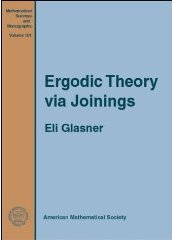 Second semester of a full-year intro course in Dynamical systems,
using the new-ish text by Glasner.
Ergodic Theory and Dynamical Systems 1
.
A full-year introductory course in Dynamical systems
with emphasis on Ergodic theory
(studies measure-preserving maps
of a space to itself)
and elementary Topological Dynamics
(studies continuous maps
of a compact metric-space to itself).
As time permits, Symbolic dynamics may be
studied.
Sets and Logic
.
Helps students to read and produce proofs, and learn the basic language of
modern Mathematics.
Second semester of a full-year intro course in Dynamical systems,
using the new-ish text by Glasner.
Ergodic Theory and Dynamical Systems 1
.
A full-year introductory course in Dynamical systems
with emphasis on Ergodic theory
(studies measure-preserving maps
of a space to itself)
and elementary Topological Dynamics
(studies continuous maps
of a compact metric-space to itself).
As time permits, Symbolic dynamics may be
studied.
Sets and Logic
.
Helps students to read and produce proofs, and learn the basic language of
modern Mathematics.
 Advanced Calculus for Engineers and (Physical) Scientists
[ACES]
Introductory Real Analysis on Euclidean Spaces.
One might say that it is
Calculus done right,
on Rn,
with rigorous definitions and proofs.
(If time permits, we'll do an
introduction to Metric Spaces, probably in the second semester.)
Advanced Calculus for Engineers and (Physical) Scientists
[ACES]
Introductory Real Analysis on Euclidean Spaces.
One might say that it is
Calculus done right,
on Rn,
with rigorous definitions and proofs.
(If time permits, we'll do an
introduction to Metric Spaces, probably in the second semester.)
 Advanced Calculus (Theoretical)
[ACT]
Introductory Real Analysis on Metric Spaces.
For students who plan to do graduate work in mathematics, this is the
AdvCalc course to take.
Abstract Algebra 1
.
An introduction to Groups, Rings and Fields.
This is for the motivated hard-working
ambitious student who likes games, puzzles ...and Thinking in general.
Sets and Logic
.
Helps students to read and produce proofs, and learn the basic language of
modern Mathematics.
Advanced Calculus (Theoretical)
[ACT]
Introductory Real Analysis on Metric Spaces.
For students who plan to do graduate work in mathematics, this is the
AdvCalc course to take.
Abstract Algebra 1
.
An introduction to Groups, Rings and Fields.
This is for the motivated hard-working
ambitious student who likes games, puzzles ...and Thinking in general.
Sets and Logic
.
Helps students to read and produce proofs, and learn the basic language of
modern Mathematics.
Number Theory & Elliptic Curve Cryptography
is an undergraduate Special Topics course which is also appropriate for
graduate students who have not had extensive Number Theory.
This course does not require
MAS4203 as prerequisite. All that is necessary is some
preparatory reading
from a free online NT text.
What we cover will be partly determined by students' interests.
The central theme is Number Theory and codes of various kinds: Diffie-Hellman protocol, Huffman coding, Ziv-Lempel, Meshalkin isomorphism code, Elliptic Curve Codes. We will discuss various algorithms, such as repeated-squaring, and Shank's Baby-step Giant-step method for computing a Discrete logarithm.
 Computational Linear Algebra
.
Matrices, determinants, Gauss-Jordan algorithm, eigenvalues/vectors,
matrix diagonalization, various matrix decompositions.
Computational Linear Algebra
.
Matrices, determinants, Gauss-Jordan algorithm, eigenvalues/vectors,
matrix diagonalization, various matrix decompositions.
My section of this course will have a test of prerequisite knowledge on Monday, 27Aug2007. The course webpage has a Sample Exam.
Number Theory 1,
of Spring 2007.
Modular arithmetic,
Chinese Remainder Thm,
Legendre/ Jacobi symbols,
Quadratic reciprocity,
Fermat's SoTS thm,
Lagrange 4-square thm, basic cryptography (Diffie-Hellman, RSA).
Assumes no previous knowledge of Number Theory.
Computational Linear Algebra
.
Matrices, determinants, Gauss-Jordan algorithm, and various matrix decompositions.
Number Theory 2 & Cryptography:
A continuation of my NT1 with an emphasis on Mathematical Cryptography.
Course NT1 is not a prerequisite; modular arithmetic and a little
bit more is sufficient.
Advanced Calculus
This is an introductory Real Analysis course. One might say that it is
"Calculus done right", with rigorous definitions and proofs. If time
permits, we'll do an introduction to Metric Spaces.
Introduction to Number Theory, 1
, Spring 2006.
This course is an introduction to elementary number theory. It
assumes no previous knowledge of number theory.
 Numbers & Polynomials
.
Textbook: Numbers & Polynomials
by Prof. Kermit Sigmon.
This course is run
Numbers & Polynomials
.
Textbook: Numbers & Polynomials
by Prof. Kermit Sigmon.
This course is run Moore Method, meaning that students prove all theorems, with enlightened guidance from the Professor.
(theoretical) Linear Algebra
.
MAS4105.
Abstract Algebra 1
An introduction to Groups, Rings and Fields.
Prof. King will be on Research Leave for Autumn2004-Spring2005
and will not be teaching.
(He does plan to be present!, working
on a writing project.)
 Probability & Potential Theory 2
MAP6473
MWF 7 in FLO100.
(Griffin-Floyd Hall.)
Elementary Differential Equations
MAP2302 section 3145 :
Beginning differential eqns for the bright, motivated, hard-working student.
Probability & Potential Theory 2
MAP6473
MWF 7 in FLO100.
(Griffin-Floyd Hall.)
Elementary Differential Equations
MAP2302 section 3145 :
Beginning differential eqns for the bright, motivated, hard-working student.
 Probability & Potential Theory 1
MAP6472
MWF2 in LIT217.
Calculus III
Careful treatment of multi-dimensional calculus.
Abstract Algebra 1
An introduction to Groups, Rings and Fields.
Elementary Differential Equations
Beginning differential eqns for the bright, motivated, hard-working student.
Numbers&Polynomials
Axioms of the real-number-system. Class is run Moore-method, with
students collaborating to find the proofs.
Honors Calculus III
Careful treatment of multi-dimensional calculus.
Probability & Potential Theory 1
MAP6472
MWF2 in LIT217.
Calculus III
Careful treatment of multi-dimensional calculus.
Abstract Algebra 1
An introduction to Groups, Rings and Fields.
Elementary Differential Equations
Beginning differential eqns for the bright, motivated, hard-working student.
Numbers&Polynomials
Axioms of the real-number-system. Class is run Moore-method, with
students collaborating to find the proofs.
Honors Calculus III
Careful treatment of multi-dimensional calculus.


